Bulletpies · wiki

Restock

You are the villager. The customer is a player, and he arrives at dawn

BuiltNeoForge1.21.1
Status
1.0.0 builds, 69 tests, server-verified; nobody has ever played it
Mod loader
NeoForge
Minecraft
1.21.1
Who installs it
Everyone on the server needs it

What it is

Every villager mod lets you buy things from villagers. Restock turns the counter around: you are the villager, and a customer with a player skin is walking to your shop. The night before, a paper Notice tells you his name, what he wants, and one line of his handwriting. You have until dawn to make the goods, price them on your Stall, and be standing behind it when he walks in and judges you.

The first Notice reads like a shopping list until you look at the handwriting. Every count exact, or all caps and misspelled, or no prices written at all, and nothing in the mod ever tells you what any of it means. You spend the night working your station and second-guessing three numbers, and then a man crests the hill at dawn and you stop being a shopkeeper and become an audience. He reads your shelf line by line with his mood floating over his head, you get exactly one price change while he stands there, and then he pays, or kicks your composter over, or comes over the counter at a sprint while you remember that you cannot hold a sword.

👥 Playing with friends

Two shopkeepers at one bell is the intended shape; nearby stalls read as one shelf to him.

⚠️ Before you install

  • Nobody has ever played this. The jar builds, 69 tests pass and a dedicated server boots it clean, but every screen, model and line of on-screen text is unverified in a real client.
  • A vanilla client cannot join a server running it; the Stall and the Customer are registered content, so everyone must install the mod.

Your first 5 minutes

New to this mod? Do these in order and you will have seen the point of it.

  1. Create a normal survival world. The mod finds the nearest village, moves your spawn to its bell and sets the clock to morning.
  2. Pick a trade by touching one of the nine job-site blocks laid out around the bell. There is no menu; the touch is the choice.
  3. Read the Notice when it arrives: who is coming, what he wants, what he reckons each line is worth, and one line of handwriting.
  4. Stand at your workstation and hold the button for four seconds. A bundle of your trade's goods drops out. That is Restocking.
  5. Put goods in the Stall slots and write a price under each one. His guess and your ask are two different numbers on purpose.
  6. Be behind the counter at dawn, watch him read, and spend your one Concession wisely.

How it works

The Notice

A paper arrives the night before each visit with the customer's name, his list, and what he reckons each line is worth. It never names which of the eight archetypes is coming; instead it carries a tell, one line of his handwriting, and the mod never explains a single one. Neat handwriting with every count exact is one kind of person. All caps, misspelled, with an 'or else lol' is another.

Tip: From wave 5 the Notice also carries a Season card: BOOM, RIVAL, RUMOUR or EARLY. RUMOUR means one of those numbers is a lie.

Being a villager costs something

Eight inventory slots, because that is what a villager has; anything past them is fumbled onto the floor, never deleted. You mine everything outside your trade at 60 percent speed. You deal no damage at all: swing a sword and nothing happens, and only the Fletcher can draw a bow. Stay out after dark and Sleepless starts costing you a shelf slot the next day.

You do not gather. You Restock

Vanilla villagers conjure their stock out of nothing by working at their job site, and you are a villager now, so you do too. Stand at your workstation, hold the button for four seconds, and a bundle of your trade's goods appears. Twice a day on vanilla's own numbers, three times with an upgrade. That is your edge over the man walking towards you: he can swing a pickaxe, you can make bread appear.

Nine trades, each with one verb

Your trade is your class, and its workstation is a vanilla block: composter, smithing table, lectern, brewing stand, cartography table, smoker, loom, fletching table or stonecutter. Each trade has one verb only it can do. The Farmer Sows a 9x9 in one action, the Toolsmith Tempers a tool with a 15 percent chance of Masterwork, the Cartographer Surveys to learn who is really coming and what he can really pay, the Cleric Blesses the whole square.

Tip: A Tempered Masterwork keeps your name in its tooltip forever, wherever the tool ends up.

Price it, then watch him read it

Every shelf slot gets a number, and the screen shows what a thing is worth and what he reckons it is worth, which are different. He arrives at dawn, stands at the counter and reads for ten to thirty-five seconds with his mood over his head. The shelf is frozen while he does, and you get one live re-price, the Concession, two with an upgrade.

The verdict is acted out, never printed

No chat message and no summary screen. Delighted, he tips and the next budget grows. Satisfied, he pays and remembers you. Disappointed, he kicks your composter over on the way out. Angry, he breaks your workstation, and you cannot Restock until you rebuild it. Hostile, he comes over the counter after you, and running is the plan. Hold emeralds out to a hostile customer and he takes what he is owed and goes; or ring the bell, once per visit, and the golems come.

Heat, and the Reprisal

Every customer who leaves hostile raises the Heat, a difficulty dial you set yourself. At one or two they arrive better armed with less patience. At three or four he brings a friend who waits ten blocks out and joins in if it turns ugly. At five, one morning there is no Notice at all: three of them come over the hill with no list. Beat them and the Heat resets, and the village is left alone for a while.

Death is a change of body, not a game over

Die and you wake up as the nearest surviving villager, their profession mapped onto one of the nine trades. Your stall, chest and emeralds stay put; your upgrades die with you. A grave goes in by the bell with your name, trade and the wave that got you, and the row of graves is the Chronicle, which starts paying out from your third life: emeralds, then a carried-over recipe, then an iron golem waiting at the bell. When there is nobody left to become, the Season ends and you walk until you find another bell 150 blocks away, where a new one starts.


Items & blocks

The Notice

The Notice

The paper that starts every wave: his name, his list, his guesses, and one line of handwriting that is the only warning you get.

Where: Arrives on its own the night before each visit.

The Stall

The Stall

Your counter. Goods go in the slots, a price goes under each one, and it is the only thing the customer ever reads.

Where: Yours from the first morning; extra shelf slots are bought with emeralds.

The Grave

The Grave

Placed at the bell when a shopkeeper dies, carrying their name, trade and the wave that got them. Stand near one to read it.

Where: Die. The row of them is the Chronicle, and it survives everything.

The Customer

The Customer

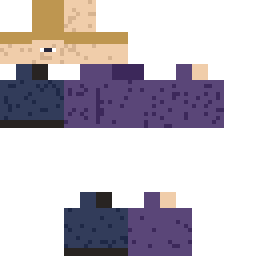
A player-model visitor wearing one of ten generated skins, chosen by hashing his name. Eight archetypes, from the Kid who can never hurt you to the Griefer whose list was always bait.

Where: He finds you. One per wave, at dawn.

The Dentist

The Dentist

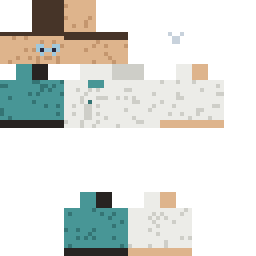
An occasional ninth visitor in a white coat with his own skin, reading your shelf like a chart. Pays 25 percent over. Stands a long time.

Where: A cameo from another mod. His tell is a neat appointment card with a time written on it.

Lore

Flavour, not rules. None of this changes how the mod behaves.

The handwriting

Nothing in the mod explains the tells. A doodle of a house in the corner means one thing, a list written in walking order means another, and prices crossed out and written lower means brace yourself. Learning to read them is the game, and the mod trusts you to do it without a glossary.

The Chronicle

The village keeps its books in stone. Every shopkeeper who has ever stood behind the counter gets a grave at the bell, and each new one inherits the shop from all of them: their stall, their prices, their reputation, and everything the last village did to deserve what is coming.

Jokes & trivia

Bits you might miss

  • The Griefer's tell in full: ALL CAPS, misspelled, 'or else lol'. The list was always bait.
  • Backbone, the 400 emerald capstone upgrade, is described in its entirety as: your hands do something, at last. Not much.
  • A disappointed customer files no complaint. He kicks your composter over on the way out.
  • The Whale's tell is that there are no prices written at all. He was never going to check.
  • There is no cue when a customer arrives. If you were in the chest when he crested the hill, that is on you.
  • The Dentist is not from around here, reads everything twice, and pays 25 percent over the going rate for the privilege.
  • The BOOM season card's entire explanation is: he is flush.

From the workshop

  • Every texture, GUI panel and customer face is generated by a Python script. Nothing in the mod is hand-pixeled.
  • Customer faces are picked by hashing the name into one of ten skins. The release audit noted a plain modulo would have handed half of all names a negative index and drawn the missing-texture checkerboard across a whole human standing at the counter.
  • One reachable customer is a Heat escort spawned under an existing customer's name with _2 stuck on the end: a different string, a different hash, a different face, and originally on nobody's list. A test now walks every name that can exist.
  • The trade, notice and progress packages import no Minecraft code at all, so their tests run in a bare JVM.
  • A language-file completeness test builds every key the code can construct and also fails on keys nothing reads. It caught exactly one dead string, left over from an earlier version of the Stall screen.
  • No game client was ever launched during development, on purpose. The whole mod was built and verified headless, which is why this page can tell you the pricing rules but not what the counter looks like lit at dawn.

FAQ

Can I fight at all?

No. You deal zero damage with everything, and only the Fletcher can draw a bow. The late-game Backbone upgrade costs 400 emeralds and gives your hands something, which the mod itself rates as not much. Tribute, the bell, and running are the real tools.

How do I know what a customer will actually pay?

You mostly do not, which is the game. The Cartographer's Survey verb writes his real archetype and budget onto the Notice once a wave, and the Appraisal upgrade shows roughly what he will pay, never the exact number.

What happens when I die?

You wake up as the nearest surviving villager, keeping the stall and losing your personal upgrades. A grave goes in at the bell. When nobody is left to become, the Season ends and you walk to another village.

Can I play it with friends?

Yes, and it is the intended shape: everyone gets a first morning at the same bell, with their own stall and chest. Every stall within 24 blocks reads as one shelf to the customer, and matching goods go to the cheapest ask. Undercutting your neighbour is not a feature that was added; it is what happens.

Do I need anything else installed?

NeoForge 21.1 or newer on Minecraft 1.21.1, Java 21, and nothing else. There is no config file, and the four /cs commands exist for testing rather than playing.

Images

Dentist render
Dentist
Face 0 render
Face 0
Face 1 render
Face 1
Face 2 render
Face 2
Face 3 render
Face 3
Face 4 render
Face 4
Face 5 render
Face 5
Face 6 render
Face 6
Face 7 render
Face 7
Face 8 render
Face 8
Face 9 render
Face 9
Grave render
Grave
Stall render
Stall
Stall Awning render
Stall Awning

Get it

Status: The jar compiles and the author has tested it himself, but it has not had a real playtest yet.

  1. Install NeoForge for Minecraft 1.21.1. The install guide walks through this assuming no prior knowledge.
  2. Drop the mod's .jar file into your mods folder.
  3. Everyone on the server needs it.
  4. Launch the game with that loader's profile selected.

📦 Where is the file?

This wiki documents the mods; it does not host them. Builds live in the project's own repository under mc-restock/build/libs/.

Bulletpies

↑ Back to top · ← All mods