The ladder
The whole escalation is one formula: llamas equal the tier plus one. Tier 1 is untouched vanilla with its usual two llamas. Every trader death moves the world up one tier, to a maximum of ten. Tier 3 brings armour, tier 4 brings a guard, tier 7 brings heavier armour and a second guard, and tier 9 arrives with ten llamas.
Tip: Tier 1 is byte-for-byte vanilla. The mod is invisible until somebody kills somebody.
What counts as a kill
Any death of a wandering trader that was not inflicted by a mob. Your sword counts. So do lava, fire, flint and steel, falling, drowning, suffocation, cactus and a trap set an hour earlier by anyone at all. A trader killed by a zombie, a husk or a pillager patrol is free and moves nothing. Without that exclusion the tiers would climb overnight while you were asleep and the escalation would stop reading as a consequence of anything you did. A trader who simply despawns is not a death.
Tip: Blame is blunt on purpose. It needs to feel right, not survive cross-examination.
The caravan
Exactly two llamas are ever leashed to the trader. The rest chain themselves onto those two using ordinary vanilla llama caravan behaviour, so a tier-9 escort assembles itself into a train snaking over a hill rather than a blob orbiting a man. Vanilla's caravan chain tops out at eight links, and tier 9 sits exactly on that limit. Strays that wander more than ten blocks off are quietly pathed back toward the trader once a second, because a llama that drifts past nine blocks can never rejoin on its own.
Tip: Two leashes at every tier, so the leash rendering never becomes clutter.
The burning rule
From tier 2 onward, the moment the trader catches fire his llamas turn on the nearest player within sixteen blocks, and if nobody is that close, on the last player seen within thirty-two blocks in the previous minute, which is the trap-and-step-back case. Vanilla llamas only ever retaliate against something that hit the trader directly, so lava and flint and steel had no attacker to blame. That gap is exactly the one players actually use.
Tip: This can absolutely blame a bystander who walked past a lava lake. That is kept deliberately.
Armour that means something
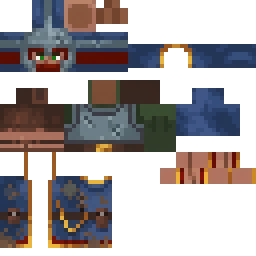
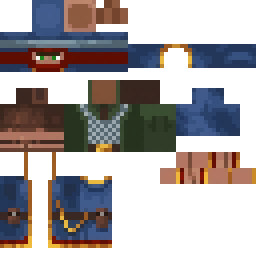
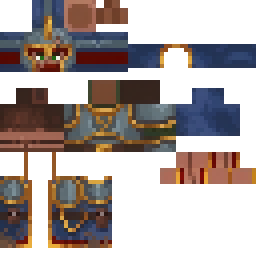
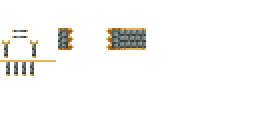
From tier 3 the trader wears a different texture and gains real statistics to match: extra health, armour and armour toughness that grow with each tier, plus knockback resistance so he cannot be shoved into his own death. He is explicitly not given fire resistance, because burning is the interesting failure case and the whole burning rule exists to answer it. A test asserts that a trader can never look armoured without actually being armoured.
The Guild Guard
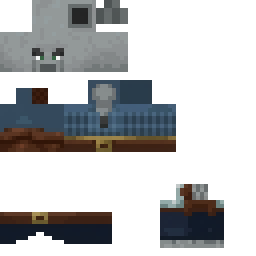
From tier 4 a crossbow guard rides one of the two leashed llamas at the head of the train; tier 7 adds a second on another llama. He is passive until provoked (he shoots if the trader is attacked, if the trader catches fire, or if he is shot at himself), because a caravan that opened fire on sight would make every trader encounter a fight. He refuses to target llamas, traders or other guards, joins no raids, and iron golems are prevented from attacking him.
Tip: A guard whose trader has been gone for thirty seconds quietly retires, so armed illagers never accumulate in your world.
One number for the whole world
The tier is a single per-world count, not a per-player one. In multiplayer that means one person's three trader kills put everybody on tier 4, which is the intended social outcome; it makes dead traders a group problem and generates the argument. The world also keeps a record of each dead trader: the day, the cause, and who was nearest.
Tier 10 is not finished
Nine kills puts the world at tier 10, where the trader wears the ceremonial gold sheet and brings eleven llamas and two guards. The boss fight itself and the promised shutdown of all future trader spawns are designed but not built, so at present tier 10 is the top of the ordinary ladder wearing the best armour in the mod.